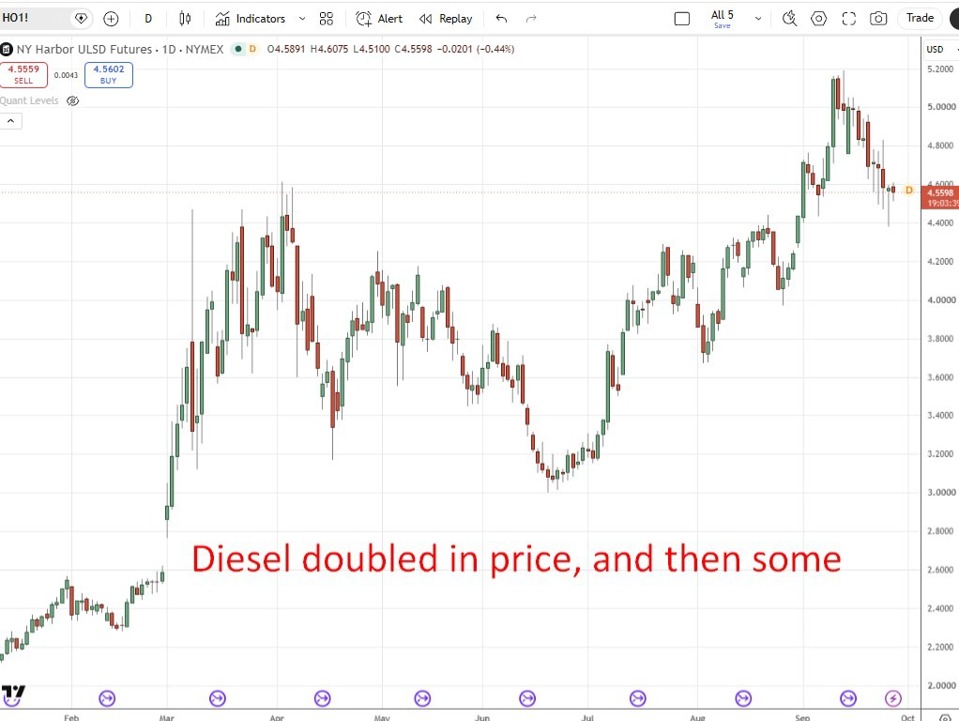
Goldman Sachs analysts estimate that a US ban on diesel exports would initially lower American diesel prices by about 25 cents a gallon each week, or around 4% from the current level of about $6.50, while raising European wholesale prices by about $3 a barrel, or around 2%. The estimates come from a report the bank published on Sept. 26.
The analysts said releases from European strategic diesel reserves could offset roughly half of the initial increase on the continent. The United States is the world’s largest diesel exporter and is weighing export curbs to counter surging domestic prices, as the war with Iran has curbed Middle East supply. Platts, part of S&P Global Energy, assessed the US Gulf Coast export ultra-low-sulfur diesel price at a record of around $4.78 a gallon on Sept. 16.
Goldman described restrictions as a very plausible scenario, but not its base case. The bank’s central concern is the knock-on effect for other fuels. Because diesel, gasoline and jet fuel are largely produced together, the analysts said a longer ban would probably push US gasoline prices higher. As US diesel stocks approached storage limits, falling diesel prices would squeeze refining margins and would likely prompt refiners to reduce output. Once diesel storage is full, Goldman expects US retail gasoline to rise by about 30 cents a gallon.
The analysts also considered what would follow if a ban were lifted. US diesel prices would likely reconnect with those elsewhere, including Europe, lifting American prices and easing them abroad. Even so, Goldman said global refined product prices would probably stay higher than in a world with neither a ban nor the resulting fall in US refinery output.
On positioning, Goldman recommends buying European gasoline. It said gasoline markets are tightening rapidly, and that a possible US export ban on gasoline would tighten supply outside the United States. The analysts noted that Europe’s gasoline strategic reserves are four times smaller than its diesel reserves, leaving significantly less of a buffer against supply disruption. With Middle East supply already curbed by the war with Iran, any US export policy decision could move product cracks and crude prices materially.